

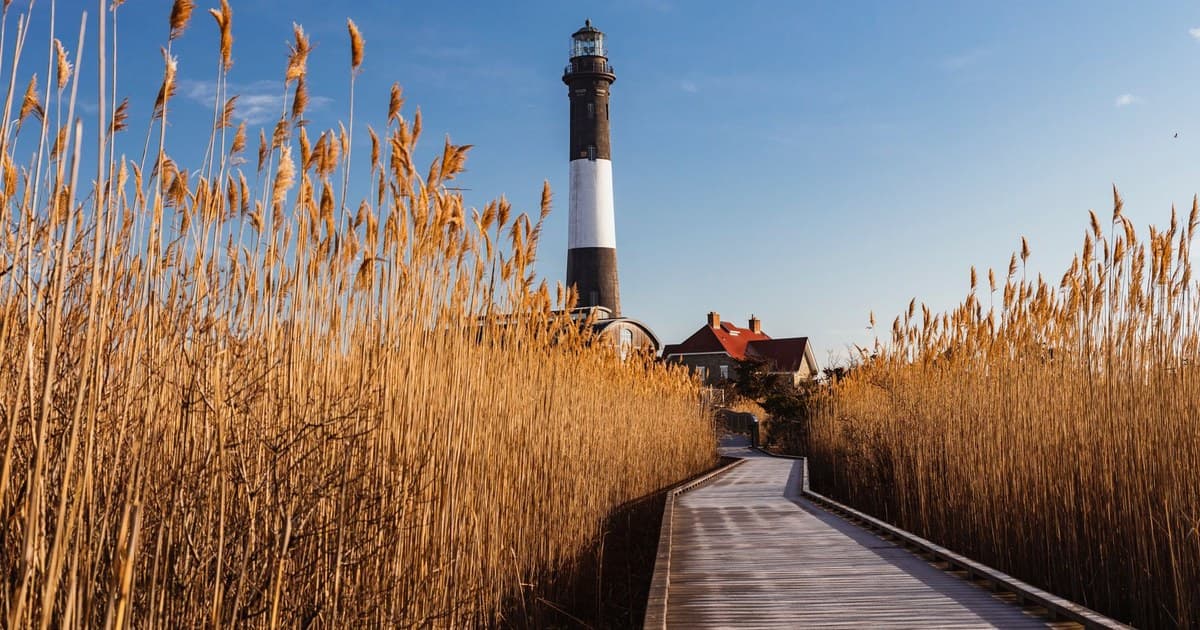
Fire Island in summer is a logistics problem: ferry schedules, wagon rules, share-house politics. Fire Island in November is a drive down the Robert Moses Causeway and a walk on a beach with nobody on it. The island's two car-accessible ends stay open through the off-season, and the Thanksgiving long weekend is the best time all year to see them.
The plan, in one paragraph
Drive the causeway to Robert Moses State Park, park at Field 5, and take the boardwalk east through the dunes to the Fire Island Lighthouse. Climb it if the tower is open. Walk back along the ocean side of the dunes. Look for seals. Be off the island before the light goes, which in late November is earlier than anyone expects.
The lighthouse
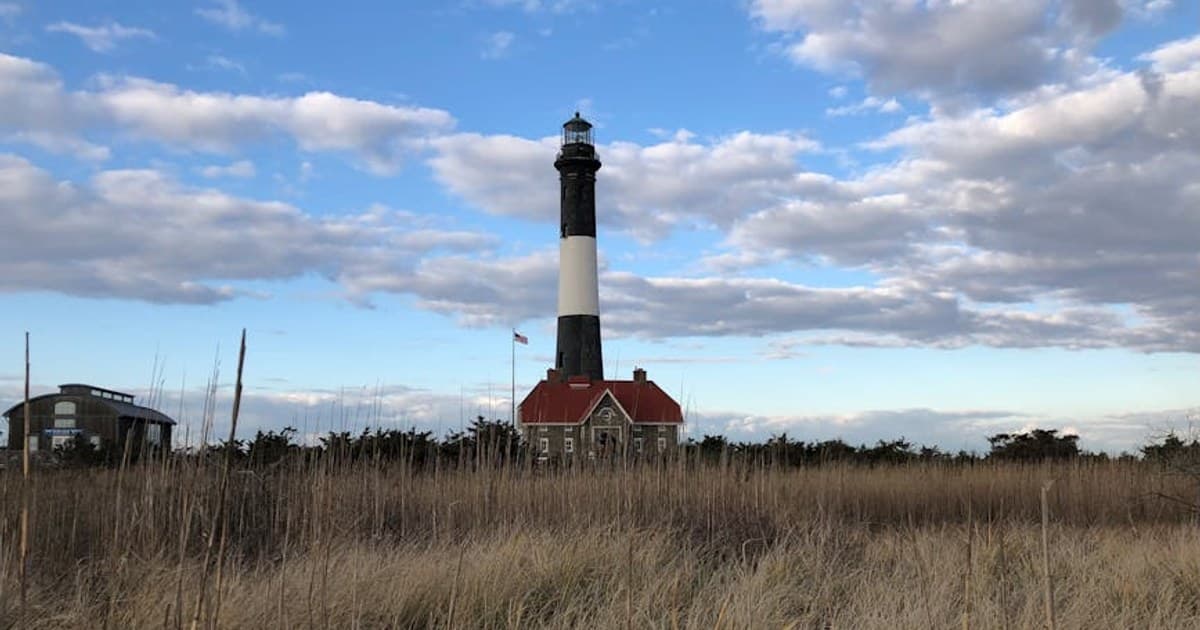
The black-and-white tower is the second lighthouse on the site. It was first lit on November 1, 1858, stands 168 feet tall, and replaced a shorter 1826 tower a short distance away. It went dark at the end of 1973, came close to demolition, and was saved by the Fire Island Lighthouse Preservation Society, founded in 1982. It was relit in 1986 and is now owned by the National Park Service as part of Fire Island National Seashore, with the society running the site.
What to know before going:
- The climb is 182 steps. Tower admission is $10 for adults, with discounts for seniors, veterans and children. Children must be at least 42 inches tall.
- The grounds and museum are free. The keeper's quarters, the lens building and the boathouse cost nothing during open hours.
- Hours shrink in the off-season. The society lists the museum as open daily and the tower on weekends, and recommends calling ahead on weekdays. Holiday hours are worth a call too.
- The walk from Field 5 is a flat boardwalk through the dunes, under a mile each way, and one of the prettiest short walks on the South Shore in any season.
The beach
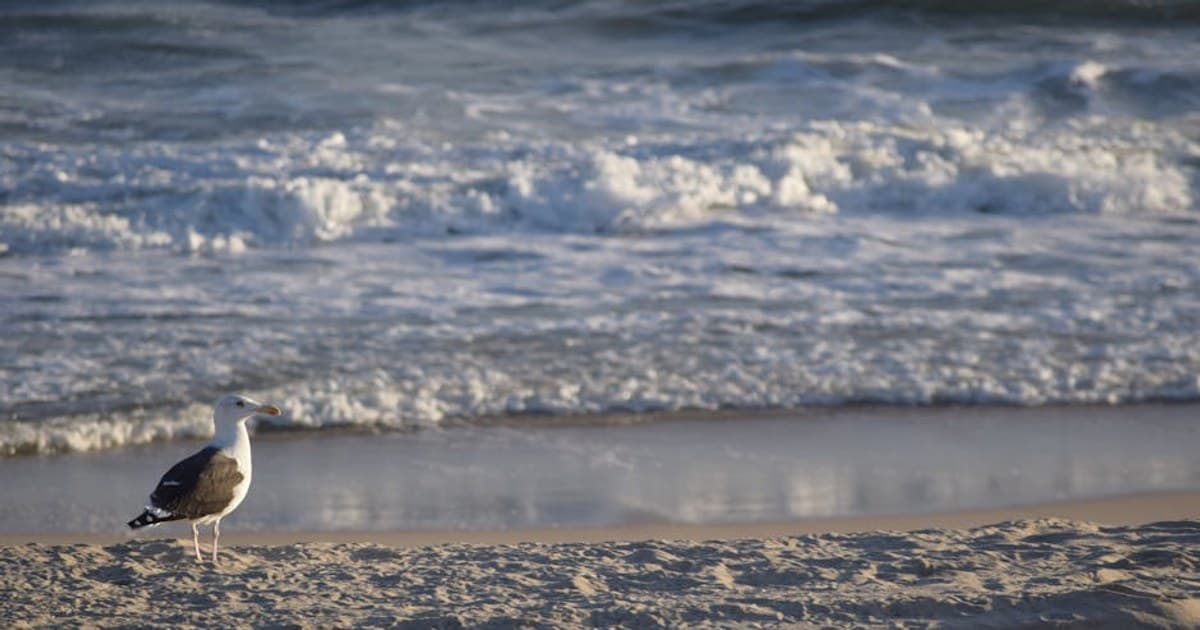
In November the ocean beach at Robert Moses is as empty as it gets within an hour of the city. What remains are surfcasters, a few walkers and the wind.
The off-season rules are simple. Dress for the wind rather than the thermometer; the Atlantic side is reliably colder than the bay side. Stay off the dunes, which are protected and fragile. And remember that services on the island thin out sharply from October through April, including restrooms and food.
The seals
From November through April, seals come down to Long Island waters, and the National Park Service notes that sightings along Fire Island are common in winter. Harbor seals are the regulars, and gray seals turn up too. Numbers build through the winter, with late winter usually the peak, so a November sighting is a bonus rather than a promise.
If you see one on the sand, it is almost certainly resting, not stranded. Keep well back, keep dogs leashed and away, and do not try to get it back into the water. The Park Service asks visitors not to approach or disturb seals on the beach.
The other end of the island
At the eastern end, the Wilderness Visitor Center at Smith Point is the gateway to the Otis Pike Fire Island High Dune Wilderness, the only federally designated wilderness in New York State. Like the lighthouse, it is reachable by car year-round, though its hours vary in the off-season, so call before driving out.
On the mainland nearby, the grounds of the William Floyd Estate, the family home of a signer of the Declaration of Independence, are open year-round from 9 AM to 5 PM.
What is closed: Watch Hill and Sailors Haven, home to the Sunken Forest boardwalk, run late May to mid-October and are reachable only by boat or on foot. In November, they are off the itinerary.
What to bring
Off-season Fire Island assumes you are self-sufficient:
- Layers, then one more. A wind shell over a warm layer, plus a hat. The boardwalk is exposed the whole way.
- Food and water. Services on the island run thin from October through April, so carry what you need for the day.
- Binoculars. For seals offshore, and for the snowy owls the Park Service says occasionally turn up near the winter beach.
- The lighthouse phone number. Off-season hours change, and a call saves a wasted drive.
The ferry question
For anyone who wants the island's villages rather than its ends, Fire Island Ferries runs from Bay Shore to Ocean Beach beyond the summer season on a much thinner schedule, and posts winter timetables that can change with weather and, later in the season, bay ice. Confirm the day's schedule before driving to the terminal in Bay Shore, and expect most of Ocean Beach's businesses to be closed.
For adults 21+
This is the part of Fire Island where the land rules get layered. Robert Moses State Park is state land. The lighthouse, the Smith Point visitor center and the seashore around them are federal property, managed by the National Park Service, where cannabis is illegal under federal law regardless of New York's legalization. New York state law prohibits cannabis consumption on state-owned land and in public spaces. Every stop in this plan is one or the other.
It is also a driving day from start to finish. Never drive after consuming.
For purchases made elsewhere on the trip, buy only from licensed retailers and verify licensed status via the OCM QR code at cannabis.ny.gov. Licensed storefronts on Long Island are concentrated in a handful of Suffolk towns, so check the dispensary directory before planning a stop.
The Fire Island town hub has more on the island, and the events hub lists what is happening on Long Island through the season.